





Time:2026-01-12 Views:1
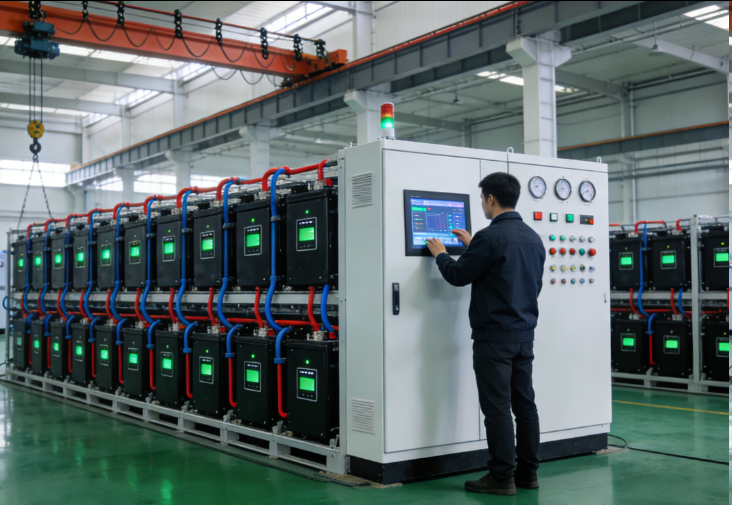
Flow energy storage batteries, known for their large - scale energy storage capabilities, are undergoing significant upgrading and replacement processes to meet the growing demands of the energy storage market. The continuous development of this technology aims to enhance efficiency, reduce costs, and improve environmental compatibility.
One of the key areas of upgrading is the improvement of electrolyte materials. Traditional electrolytes in flow batteries may suffer from issues such as limited solubility, low conductivity, or high toxicity. Newly developed electrolytes, however, focus on using more environmentally friendly substances with higher ionic conductivity and stability. For example, the introduction of organic - based electrolytes with improved redox properties can significantly increase the energy density and power output of flow batteries. This not only boosts the overall performance but also extends the lifespan of the battery system.
Another important aspect of the upgrade is the optimization of the battery stack structure. Advanced manufacturing techniques are being employed to create more compact and efficient stack designs. By reducing internal resistance and improving the flow distribution of electrolytes within the stack, the charging and discharging efficiency of the battery can be greatly enhanced. Additionally, the use of new membrane materials with better ion - selective permeability helps to minimize the self - discharge rate, which is a common problem in flow batteries. This ensures that the stored energy can be retained for longer periods, improving the reliability of the energy storage system.
The replacement process also involves integrating intelligent management systems. Modern flow energy storage batteries are now equipped with sensors and control units that can monitor key parameters such as electrolyte concentration, temperature, and voltage in real - time. This data - driven approach allows for precise control over the charging and discharging processes, optimizing the performance and safety of the battery. Furthermore, these intelligent systems can predict potential failures and initiate preventive maintenance, reducing downtime and overall operating costs. With these continuous upgrading and replacement efforts, flow energy storage batteries are becoming more competitive in the energy storage market, providing a reliable and sustainable solution for large - scale energy storage needs.




 59911926@qq.com/sales@goldenfuturehk.com
 13316809242 / 15816897019
 Inquiry
 Home >