





Time:2025-12-03 Views:1
Lifespan Analysis of 20kW Solar Batteries
I. Core Factors Influencing Lifespan
The lifespan of a 20kW solar battery system (referring to the energy storage battery, not the photovoltaic panels) is not a fixed value, but is comprehensively determined by four key factors: battery type, operating environment, maintenance practices, and quality & design.
(I) Battery Type: The Fundamental Determinant
Different chemical compositions of solar storage batteries result in significant lifespan differences, which directly affect the service cycle of the 20kW system. Common types and their typical lifespans are as follows:
Lithium-Ion Batteries (Mainstream Choice)
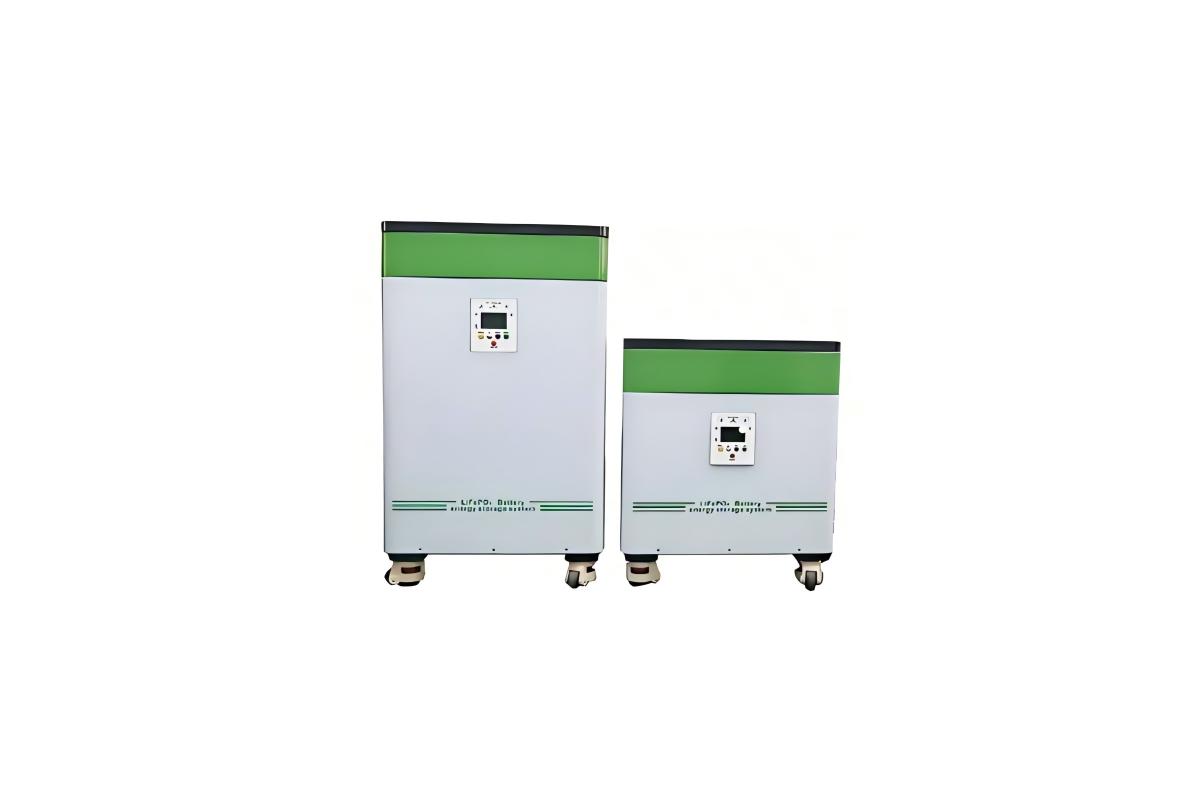
Lithium Iron Phosphate (LiFePO₄): The most widely used type for 20kW systems. It has a long cycle life (5,000–10,000 charge-discharge cycles at 80% Depth of Discharge, DoD) and a service life of 8–15 years under normal operation. Its stability in high temperatures (up to 60℃ short-term) also helps extend lifespan.
Lithium Nickel Manganese Cobalt Oxide (NCM): With a cycle life of 3,000–5,000 cycles (80% DoD), its lifespan is 5–10 years. It is more sensitive to high temperatures (prone to capacity decay above 45℃) and requires stricter thermal management.
Lead-Acid Batteries (Traditional Type)
Including valve-regulated lead-acid (VRLA) batteries, they have a short cycle life (300–800 cycles at 50% DoD) and a service life of only 3–5 years. They are gradually replaced in 20kW systems due to low energy density and frequent maintenance needs, but are still used in low-cost scenarios.
Flow Batteries (Emerging Type)
Such as vanadium redox flow batteries, they have an ultra-long cycle life (10,000+ cycles) and a service life of 15–20 years. However, their high cost and large volume limit their application in 20kW 中小型 systems (more for large-scale energy storage).
(II) Operating Environment: Key External Impact
The environment directly accelerates or slows down battery aging, especially for 20kW systems that are often installed outdoors or in semi-open spaces:
Temperature: The biggest environmental factor. Most batteries have an optimal operating temperature range of 15–30℃. For every 10℃ increase in temperature above 30℃, the battery’s cycle life decreases by 10–20% (e.g., LiFePO₄ batteries may lose 30% of their lifespan if long-term operated at 45℃). Low temperatures (below 0℃) mainly affect charging efficiency but have less impact on overall lifespan.
Humidity & Corrosion: High humidity (relative humidity >85%) or corrosive environments (near coastal areas with salt spray) can damage battery casings and internal connections, leading to internal short circuits and lifespan reduction (e.g., lead-acid batteries may experience electrode corrosion in high humidity, shortening lifespan by 1–2 years).
Charge-Discharge Depth (DoD): DoD refers to the percentage of battery capacity used in each cycle. For 20kW systems, frequent deep discharge (DoD >80%) will significantly reduce lifespan:
LiFePO₄ batteries: Lifespan is 12 years at 50% DoD, but only 8 years at 80% DoD.
Lead-acid batteries: Lifespan is 4 years at 30% DoD, but less than 3 years at 60% DoD.
(III) Maintenance Practices: Extend Lifespan by 30–50%
Scientific maintenance can effectively delay battery aging, especially for 20kW systems with high daily usage:
Charge-Discharge Management: Avoid overcharging (voltage exceeding 1.1 times the rated voltage) and over-discharging (voltage below 0.8 times the rated voltage). Most 20kW systems are equipped with BMS (Battery Management System) to automatically control charging/discharging thresholds, but regular BMS calibration (every 6–12 months) is required to ensure accuracy.
Regular Inspection: Check battery terminals for looseness or corrosion (clean with a dry cloth quarterly), monitor cell voltage balance (imbalance >0.1V for Li-ion batteries requires equalization charging), and test capacity annually (replace cells with capacity decay >20% to avoid affecting the entire battery bank).
Environmental Control: Install heat dissipation devices (e.g., fans, heat sinks) for outdoor 20kW systems in high-temperature areas; use waterproof enclosures in humid areas; and avoid direct sunlight exposure (install sunshades if necessary).
(IV) Quality & Design: Foundation of Long Lifespan
Cell Quality: High-quality lithium-ion cells (e.g., with uniform electrode coating and low internal resistance) have better cycle stability. Poor-quality cells may experience capacity decay of >50% within 2 years, even under good maintenance.
System Matching: The 20kW solar battery bank must match the inverter’s charging/discharging current (e.g., the battery’s maximum discharge current should be ≥1.2 times the inverter’s rated current). Mismatched current will cause overheating and accelerate aging.
II. Lifespan Optimization Measures for 20kW Systems
Prioritize LiFePO₄ Batteries: For scenarios requiring long-term use (e.g., commercial rooftop solar systems), LiFePO₄ batteries are more cost-effective despite higher initial investment.
Set Rational DoD: For grid-connected 20kW systems (with stable grid power), set DoD to 30–50% (use battery mainly for peak shaving, not full discharge); for off-grid systems, control DoD below 80% and configure backup power to avoid over-discharging.
Strengthen Thermal Management: For systems in areas with average annual temperature >25℃, install active cooling systems (e.g., air conditioners for battery cabinets) to keep the temperature within 15–30℃.
Regular BMS Updates: Work with battery manufacturers to update BMS software quarterly, optimizing charging/discharging curves based on actual usage data (e.g., adjusting charging current in summer to reduce heat generation).
III. Judgment Criteria for End of Lifespan
A 20kW solar battery is considered to have reached the end of its service life when:
Capacity Decay: The actual capacity drops to below 80% of the rated capacity (tested via standard charge-discharge cycles). For example, a 20kW·h battery bank with actual capacity <16kW·h can no longer meet basic energy storage needs.
Cycle Life Exceeded: The number of charge-discharge cycles reaches 80% of the battery's rated cycle life (e.g., a LiFePO₄ battery with a rated 8,000 cycles should be replaced after 6,400 cycles).
Frequent Faults: Occurrence of more than 3 faults (e.g., overheating, voltage imbalance, internal short circuit) within 6 months, even after maintenance.




 59911926@qq.com/sales@goldenfuturehk.com
 13316809242 / 15816897019
 Inquiry
 Home >