







Time:2026-04-17 Views:312
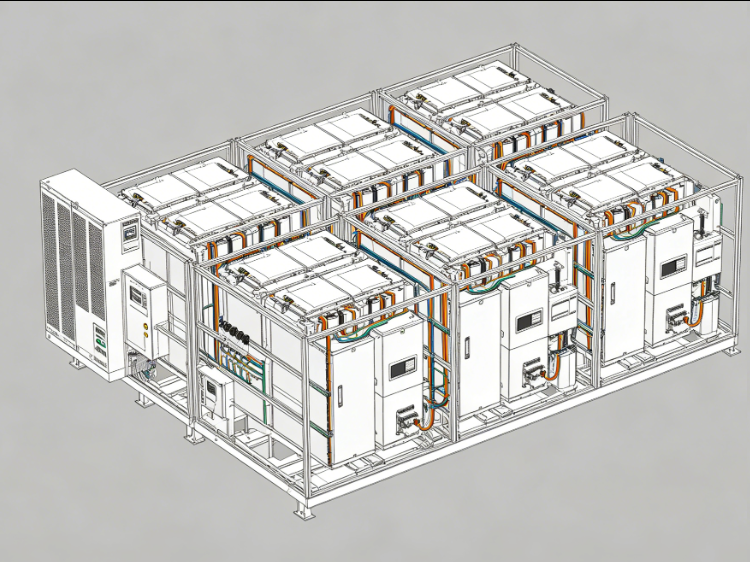
Overcharge is one of the most common safety hazards of energy storage battery systems. It refers to the phenomenon that the battery continues to be charged after reaching the full charge state, which will cause serious damage to the battery and even lead to safety accidents such as fire and explosion. Therefore, overcharge protection is an essential safety measure for energy storage battery systems, which is designed to prevent the battery from being overcharged by cutting off the charging circuit or reducing the charging current when the battery reaches the full charge state, thereby ensuring the safety and service life of the battery.
The harm of overcharge to energy storage batteries is mainly reflected in multiple aspects. For lithium-ion batteries, overcharge will cause the positive electrode material to decompose, release oxygen, and the electrolyte to oxidize and decompose, generating a large amount of heat and gas. This will cause the battery internal pressure to increase, leading to the swelling of the battery shell; if the pressure exceeds the bearing capacity of the shell, the battery will leak, and even catch fire or explode due to the reaction between oxygen and the electrolyte. For lead-acid batteries, overcharge will cause water electrolysis, generating hydrogen and oxygen, which not only consumes the electrolyte but also may cause an explosion if the gas accumulates to a certain concentration. In addition, overcharge will accelerate the aging of the battery electrode material, reduce the battery's cycle life and capacity, and increase the maintenance cost of the energy storage system.
The overcharge protection of energy storage battery systems is mainly realized through three levels: battery management system (BMS), charging module, and system-level protection. The battery management system is the core of overcharge protection, which can real-time monitor the voltage, current, and temperature of each single battery in the battery pack. When the voltage of a single battery reaches the preset overcharge protection voltage (usually the maximum safe voltage of the battery), the BMS will send a signal to the charging module to stop charging or switch to trickle charging (a small current charging mode to maintain the full charge state of the battery without causing overcharge). At the same time, the BMS can also balance the voltage of each single battery to avoid overcharge of individual batteries due to voltage inconsistency, which is especially important for battery packs composed of multiple single batteries.
The charging module also has a built-in overcharge protection function. It can automatically detect the charging state of the battery pack. When the battery pack is fully charged, the charging module will automatically cut off the charging circuit or reduce the charging current to prevent overcharge. In addition, the system-level protection includes overcharge protection relays, fuses, and other components. When the BMS or charging module fails and cannot effectively prevent overcharge, the overcharge protection relay will cut off the main circuit in time, and the fuse will blow when the current exceeds the safe range, further ensuring the safety of the system. In addition, the overcharge protection system also needs to be regularly inspected and maintained to ensure that each protection component can work normally. For example, check the accuracy of the BMS voltage detection, the reliability of the charging module's protection function, and the integrity of the relay and fuse, so as to avoid the failure of the overcharge protection system due to component aging or damage.




 59911926@qq.com/sales@goldenfuturehk.com
 13316809242 / 15816897019
 Inquiry
 Home >