





Time:2026-04-15 Views:451
Moisture and corrosion are two of the most common and damaging threats to home energy storage systems, as they can degrade battery performance, damage internal circuits, and shorten the overall lifespan of the system. High humidity, condensation, and exposure to corrosive substances (such as salt in coastal areas) can seep into the system’s components, leading to short circuits, terminal oxidation, and even complete system failure. Therefore, implementing effective moisture and corrosion prevention measures is essential to ensure the stable and long-term operation of home energy storage systems. These measures should cover both structural design optimizations and regular maintenance practices, forming a comprehensive protection system.
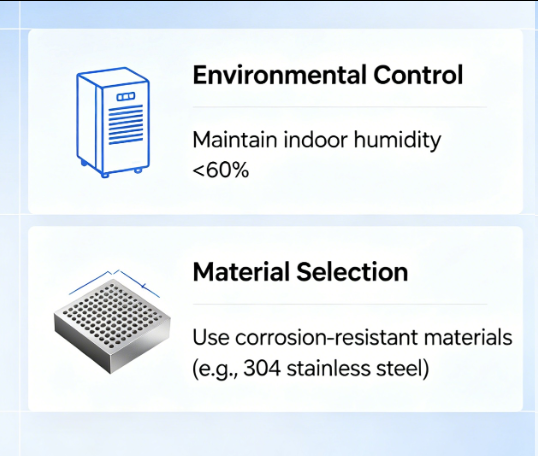
One of the core strategies for moisture prevention is to maintain a balanced seal and ventilation system for the storage enclosure. Choosing enclosures with a protection rating of at least IP65 can effectively block liquid water and dust from entering, while installing waterproof and breathable valves helps balance internal and external air pressure, preventing condensation caused by temperature differences. Additionally, adding diversion grooves and drainage holes at the bottom of the enclosure ensures that any accumulated condensation can be discharged in a timely manner, avoiding water accumulation inside. For areas with high humidity, such as rainy seasons or coastal regions, installing intelligent dehumidification devices is recommended; these devices can automatically start when the humidity exceeds 60% RH, reducing the internal moisture content to a safe range. Meanwhile, equipping the enclosure with electric heating strips or PTC heaters can maintain the internal temperature 5℃ above the ambient dew point, preventing condensation from forming on the surface of components.
To prevent corrosion, optimizing the materials and processes of key components is crucial. Battery terminals, bus bars, and other metal parts should be treated with anti-corrosion coatings, such as nano-moisture-proof coatings or zinc-nickel alloy plating, to enhance their resistance to humid and corrosive environments. The battery management system (BMS) and other electronic modules can be encapsulated with moisture-proof epoxy resin to prevent moisture from penetrating into the circuit boards. In coastal areas with high salt mist, regular spraying of anti-corrosion protectants on the external surface of the enclosure and components can further reduce the risk of corrosion. Regular maintenance is also indispensable: every 3 to 6 months, inspect the system for signs of corrosion, such as rust or discoloration on metal parts, and replace any damaged components promptly. Additionally, keeping the area around the storage system dry and well-ventilated, and avoiding direct exposure to rain, snow, or corrosive gases, can further enhance the system’s resistance to moisture and corrosion.




 59911926@qq.com/sales@goldenfuturehk.com
 13316809242 / 15816897019
 Inquiry
 Home >