





Time:2026-03-19 Views:909
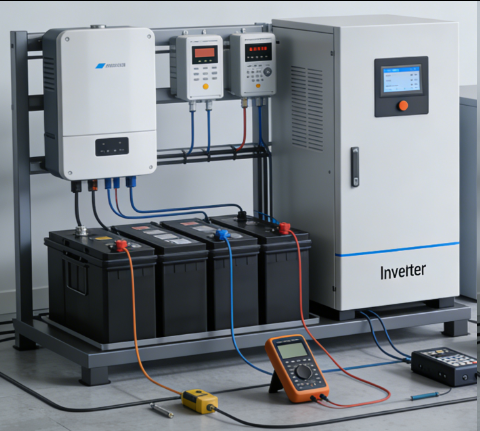
Household energy storage system load testing is a critical process to verify the system’s performance, reliability, and safety under real-world operating conditions, ensuring it can meet the dynamic energy demands of a home while adhering to industry standards. This testing involves simulating various load scenarios that a typical household may encounter, ranging from light loads such as lighting and small appliances to heavy loads like air conditioners, electric water heaters, and electric vehicle chargers. The core objective is to evaluate how the storage system responds to load fluctuations, maintains stable power output, and protects itself from potential damage caused by overloading or abnormal load conditions.
Load testing typically includes three key types: static load testing, dynamic load testing, and emergency load testing. Static load testing applies a constant load for an extended period (usually 24 to 72 hours) to assess the system’s long-term stability, energy conversion efficiency, and thermal performance. Dynamic load testing simulates sudden changes in load, such as turning on multiple high-power appliances simultaneously, to test the system’s response speed and voltage/frequency stability. Emergency load testing focuses on the system’s backup capability during grid outages, ensuring it can seamlessly switch to off-grid mode and power critical household loads without interruption.
During testing, key parameters are closely monitored, including output power, voltage, current, temperature, and state of charge (SOC) of the battery. Industry standards such as IEEE 1547 and UL 9540 provide guidelines for load testing, ensuring compliance with safety and performance requirements. High-precision testing equipment, such as the NEWARE CE-6000 series, is used to achieve accurate measurements with ±0.02% full-scale accuracy and fast current response (≤1 ms) to simulate real-world load changes. The results of load testing help identify potential issues, optimize system design, and ensure the household storage system can deliver reliable, efficient performance over its service life.




 59911926@qq.com/sales@goldenfuturehk.com
 13316809242 / 15816897019
 Inquiry
 Home >