






Time:2026-05-08 Views:102
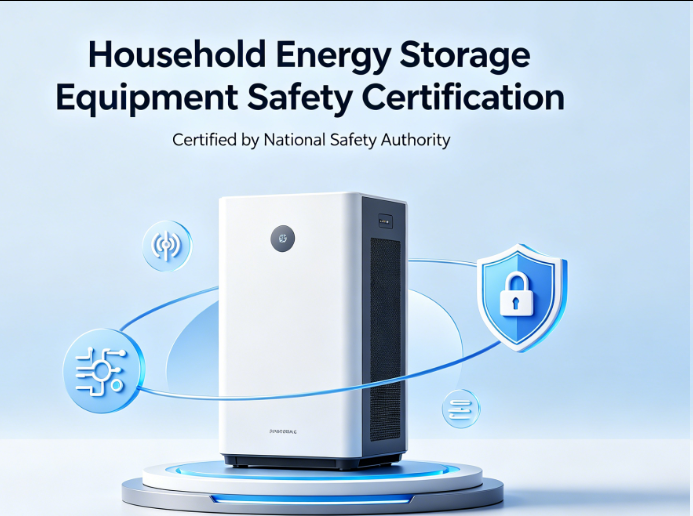
Safety certification serves as the definitive benchmark for ensuring household energy storage equipment meets stringent global standards for electrical safety, fire protection, and operational reliability. For residential installations, where safety is paramount, these certifications provide independent verification that products have undergone rigorous testing to mitigate risks associated with lithium-ion chemistry, electrical faults, and thermal events.
The cornerstone of system-level safety certification in North America is UL 9540, the Standard for Energy Storage Systems and Equipment. This comprehensive standard evaluates the entire system, including the BMS, thermal management, and electrical components, under extreme conditions such as overcharging (up to 120% capacity) and temperatures ranging from -20°C to 50°C. Research indicates that systems certified to UL 9540 experience approximately 38% fewer heat-related issues during simulated long-term use compared to uncertified alternatives. A critical supplementary standard is UL 9540A, which assesses fire containment and thermal runaway propagation. Certified systems must limit temperature spikes in adjacent modules to 150°C during cascading failure simulations, directly supporting the fire mitigation requirements of NFPA 855.
In the European market, the CE marking is mandatory, signifying compliance with essential health and safety requirements. This certification encompasses adherence to EN 62133 for battery safety, EN 61000 for electromagnetic compatibility (EMC), and IEC 62930 for system performance. The IEC 62933 standard, adopted in 72 countries, provides integrated safety protocols for home energy systems interacting with smart grids, reducing harmonic distortion by 62% compared to earlier frameworks. For component-level safety, UL 1973 focuses on battery module reliability, mandating durability benchmarks that result in 32% fewer capacity degradation incidents over five years.
Global recognition is further streamlined through the CB Scheme managed by the IECEE. This system allows a single test report to be used for obtaining certifications in multiple countries, significantly reducing certification time and costs. CB Scheme testing primarily adheres to IEC 62619 for cell safety, subjecting batteries to extreme scenarios like overcharging, short circuits, and crushing, with the BMS required to respond in milliseconds. This approach ensures that products meet consistent safety standards across international markets, facilitating global market access.
Additional critical certifications address specific aspects of residential safety. NFPA 855 outlines installation rules to minimize fire risks, specifying clearances, ventilation requirements, and placement guidelines. IEC 62109-1 and 62109-2 cover safety standards for inverters and converters, ensuring safe operation under normal and fault conditions. For portable units, UN 38.3 certification is essential for safe transportation, validating performance during altitude simulation, thermal cycling, and impact tests.




 59911926@qq.com/sales@goldenfuturehk.com
 13316809242 / 15816897019
 Inquiry
 Home >