






Time:2025-12-08 Views:1
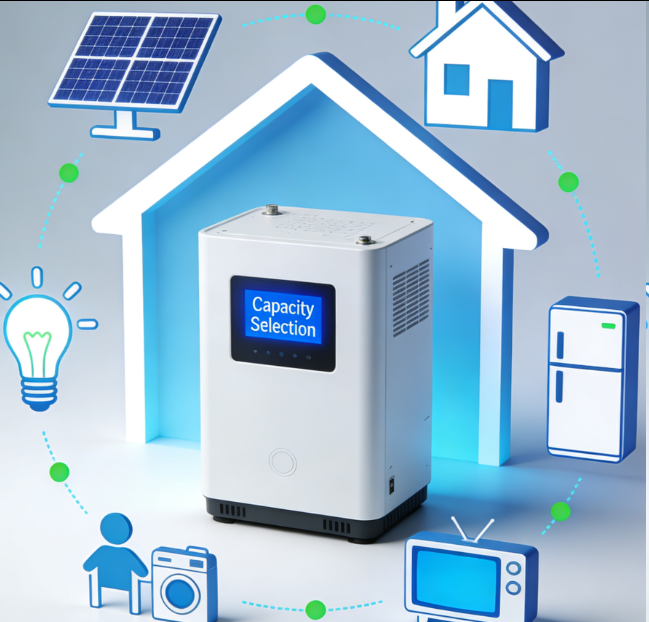
Selecting the appropriate capacity for a Home Energy Storage Battery is the most crucial decision in designing a functional and cost-effective system. Capacity, measured in kilowatt-hours (kWh), dictates how long the battery can sustain a home’s electricity usage without recharging. Proper sizing is not a one-size-fits-all process; it requires a detailed analysis of the homeowner's specific goals, whether they prioritize backup power, solar self-consumption, or Time-of-Use (TOU) optimization.
The process begins with an energy audit to determine the home's daily consumption patterns and peak load requirements. If the goal is backup power, the homeowner must identify and quantify the consumption of "critical loads" (e.g., refrigerator, communication gear, essential lighting) and decide on the desired duration of backup (e.g., 12 hours, 24 hours, or multiple days). For example, a home needing 500 Watts of continuous power during an outage and desiring 24 hours of backup would require a usable capacity of $0.5 text{ kW} times 24 text{ h} = 12 text{ kWh}$, plus a buffer for inverter losses and to ensure the battery is not discharged below its recommended depth-of-discharge (DOD). If the primary goal is solar self-consumption, the capacity must be sized to match the typical surplus energy generated by the solar array during the day that is not immediately consumed. A mismatch—a battery that is too small will frequently fill up and clip surplus solar, while a battery that is too large will rarely be fully utilized—directly impacts the financial return. Therefore, accurate load profiling, understanding the battery's usable versus nominal capacity, and factoring in the battery's rated power output (kW) are all vital steps in selecting the optimal, purpose-driven capacity for the home.




 59911926@qq.com/sales@goldenfuturehk.com
 13316809242 / 15816897019
 Inquiry
 Home >