






Time:2026-05-11 Views:513
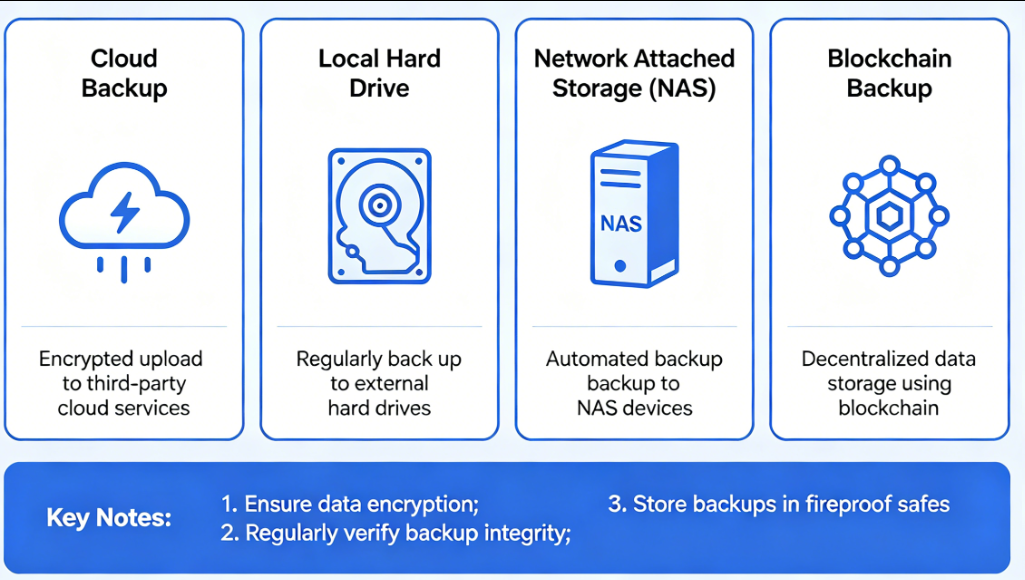
With the increasing intelligence of home energy storage systems, data has become a core component supporting their stable operation, including battery health parameters, energy storage and discharge records, system operation logs, and smart scheduling data. Once data is lost or corrupted due to system malfunctions, power outages, hardware failures, or human errors, it may lead to inaccurate battery state assessment, reduced system operation efficiency, inability to trace energy usage, and even failure to trigger safety protection mechanisms in time. Therefore, establishing a scientific and reliable data backup method is essential to ensure the long-term stable and safe operation of home energy storage systems. The core principle of data backup for home energy storage systems is to achieve "multiple backups, off-site storage, and automatic updates" to minimize the risk of data loss and ensure that data can be quickly restored when needed.
The first key method is automatic local backup combined with cloud backup, which is the most widely used and practical backup solution currently. Most modern home energy storage systems are equipped with built-in storage modules (such as SD cards, solid-state drives) that can automatically back up core data at regular intervals (usually set to 1-2 hours) according to preset parameters. The backup content should include real-time battery voltage, current, temperature, state of charge (SOC), state of health (SOH), energy storage/discharge capacity, and system error logs. To avoid data loss caused by local hardware damage (such as storage module failure, system short circuit), cloud backup should be enabled simultaneously. Users can connect the energy storage system to the home network and bind it to the manufacturer’s official cloud platform, which will synchronize backup data in real time or at fixed intervals. Cloud backup not only avoids the risk of local data loss but also allows users to view and restore data remotely through mobile apps or computer terminals, which is convenient for system maintenance and problem diagnosis. It should be noted that cloud backup needs to ensure network security, and users should set strong passwords and enable two-factor authentication to prevent data leakage or malicious tampering.
Another important backup method is manual regular backup and off-site physical storage, which serves as a supplementary measure to automatic backup. Users should perform manual full backup of the system data at least once a month, especially before system upgrades, maintenance, or seasonal changes (such as before winter and summer when energy consumption is high). The backup data can be stored in independent physical storage devices (such as portable hard drives, USB flash drives) that are not connected to the energy storage system for a long time, and these devices should be placed in a dry, cool, and anti-interference environment to avoid damage. For users with higher data security requirements, off-site physical backup can be further implemented, that is, storing a copy of the backup data in a location far from the home (such as a workplace or a safe deposit box), which can prevent data loss caused by extreme events such as fires, floods, or theft at home. In addition, data backup should be accompanied by a clear file management system, marking the backup time, content, and version to facilitate quick location and restoration of data when needed. Regularly testing the backup data (such as restoring partial data to the test environment) is also necessary to ensure that the backup data is complete and available, avoiding the situation where backup data is invalid when restoration is needed.




 59911926@qq.com/sales@goldenfuturehk.com
 13316809242 / 15816897019
 Inquiry
 Home >